
“And, determined to do my duty by her as a reader if she would do her duty by me as writer, I turned the page and read...I am sorry to break off so abruptly. Are there no men present? ... We are all women, you assure me? Then I may tell you that the very next words I read were these--- “Chloe liked Olivia...” Do not start. Do not blush. Let us admit in the privacy of our own society that these things sometimes happen. Sometimes women do like women.
“Chloe liked Olivia,” I read. And then it struck me how immense a change was there. Chloe liked Olivia perhaps for the first time in literature."
---Virginia Woolf, A Room of One’s Own
"There are times in life when the question of knowing if one can think differently than one thinks, and perceive differently than one sees, is absolutely necessary if one is to go on looking and reflecting at all."Today it is perhaps more obvious than ever that sex and gender are important organizing principles in contemporary society, increasingly central to our personal, social, and political identities. Whether we are born male or female has a profound impact throughout our entire lives. And what we do with our bodies---whom we choose to sleep with, the circumstances of our bearing and raising children, our living arrangements with other people---all work to determine our status within society. These factors dictate whether we qualify for social assistance programs or medical care, whether we are given equal access to job opportunities, how much we are paid, and what kind of work is open to us. Sexuality is at the center of contemporary debate over marriage, families, education, even over what images are allowed in our increasingly visual culture. Sexuality is, in fact, central to the relationship between the citizen and the state.
---Michel Foucault, The Uses of Pleasure
This course studies the political, artistic, and rhetorical uses of gay and lesbian identity and experience in primarily post-Stonewall literary discourse. Queer writers have struggled with the issue of representing sexual identity, not only in terms of self definition, but also in regard to how the heterosexual mainstream perceives lesbian and gay desires and activities. The contrary pull of assimilation vs. refusal has historically structured GLBT practices, both political and literary. This course is a starting point for understanding the central historical concepts that inform contemporary notions of gay, lesbian, bisexual, and transgender subjectivity and the ways they are deployed in narrative expressions of identity.
Narrative is the name given to the ordering or structuring of events in a story. The telling of stories is such a pervasive aspect of human existence that it is easy to overlook its central importance. Narrative provides the means for shaping and making sense of our experience. Without the ability to construct a narrative---to meaningfully link disparate events together---our experiences would be unevaluated sensations from an undifferentiated stream of events. Narrative, like language, is a key mediating structure for our relation to world, our encounter with “reality.”
We will begin our study with issues of narrative structure: how a story is told. How events are ordered, how the spectator or reader is situated within this order, and what the overall effects of such ordering are, will be our first topics of our investigation. Do not confuse “narrative” with “plot”---the first conceptual move in this course will be to direct student’s attention to issues of structure rather than content. Of course, we will also be examining how the two elements work together, in particular the determining effect that structure has on content.
Throughout the course I want students to begin thinking about the places where and ways in which they encounter narratives in their daily lives. Although our apprehension of the world may seem immediate, it is in fact mediated: we understand "reality” only through the various narratives (interpretations) of it to which we have access. One of the goals of this course is to make those prior interpretations visible to students, to enable them see the taken-for-granted assumptions that shape not only their understanding of literature, but also the world. This is what Antonio Gramsci called "the cultural commonsense:” those uncritical and unconscious ways of looking at the world which have come to seem natural and thus beyond question.
Papers and assignments
The format of the course consists of lectures and discussion. Students will complete three graded papers and a reading log. The graded papers will be formal, typed, critical analysis papers where students present the results of their reading and thinking. The log, however, provides a different, less formal space for students to work through the implications of their reading and viewing practices.
The log is not a diary or a journal, that is, a place to record random impressions. Rather, the log functions as a space where students can begin to critically reflect on their practices as a reader and a "social subject." The log provides a place for students to informally think and write about that week’s class discussion and reading, as well as the discussion and reading in previous classes. In other words, the log should reflect the incremental development of the student’s ideas throughout the course. Besides being a place to work on the ideas generated in specific class sessions, the log can also provide a space for students to make connections between ideas and issues beyond what can be included in individual class sessions and a place to begin thinking about the importance of narrative in other cultural and social spaces besides literature. Students will be required to make one entry a week; while the length of individual entries will vary, 300 words should be considered a base minimum.
Logs will be posted online in a team blog. By posting the logs in a public place, the discussion and knowledge created there can be shared collectively: unlike traditional papers, logs will not be just a private conversation between individual students and the teacher. The teacher as well as other students will read everyone’s log and make comments on them. Logs for each week should be posted by midnight on Friday, so entries can be read and responded to over the weekend. You must turn in a complete log in order to pass the class.
Grades
The ability to simply review or reproduce "main ideas" is not the end goal of this class. Instead, the focus is on learning how to make use of ideas and concepts. That's why there are no conventional tests or quizzes in this class. That's also why regular participation in class discussion is a course requirement (remember that in this course discussion takes place in two spaces: the classroom and the online student logs and class blog). Regular attendance then, is necessary to produce the classroom as a genuine public space marked by the active participation of all its members—not just the teacher.
The final grade is based on class participation, (15% of grade), reading logs (35% of grade), and the three papers (50% of grade). More than 3 unexcused absences will result in failing the course. All assignments must be turned in to pass the course.
Email and Blog
Use my NCC email (estevem@sunynassau.edu) to contact me outside of class, but do not email your papers or assignments unless you have made prior arrangements. When you need to contact me send a new email with a clear subject heading. Do not ask me questions by hitting "reply" to any earlier emails from me. I won't see your question if it is tacked on the end of a thread about something completely different.
Here on the main class blog you will find the syllabus, copies of the assignments, and other course material, including links to or copies of some of the texts we will be working on. I'll be writing weekly posts for the class with material useful for that week's discussion, as well as posting information or links to things of interest to the course. Consider this blog one of the texts of the class: I expect you to read it regularly and be familiar with the information posted here.
________________________________________________
Academic and Classroom Policies
It is the official policy of Nassau Community College that more than 3 unexcused absences results in an F for the course.
Please bring the assigned reading and note-taking materials with you to each class. Please do your part in creating a peaceful and productive classroom atmosphere. Silence your phone. Do not text or play games on your phone during class. Do not use offensive, oppressive, rude or discourteous language. Do not sleep in class. Disruptive students will be dropped from the course. Plagiarism is a serious academic infraction. Turning in plagiarized work results not only in failing the course, but also in possible academic suspension.
If you have a physical, psychological, medical, or learning disability that may have an impact on your ability to carry out the assigned coursework, I urge you to contact the Center for Students with Disabilities (CSD), Building U (516-572-7241, TTY 516-572-7617). The counselors at the CSD will review your concerns and determine reasonable accommodations you are entitles to by the Americans with Disabilities Act and Section 504 of the Rehabilitation Act of 1973. All information and documentation pertaining to personal disabilities will be kept confidential.
In keeping with NCC's policies, this course does not discriminate on the basis of race, religion, sex, sexual orientation, color, national origin, age, disability, marital status, or status as physically challenged, or as disabled or Vietnam-era veteran in its treatment of students and/or faculty.
________________________________________________
Texts
“We Other Victorians,” from The History of Sexuality, Michel Foucault
“Three Contributions to the Theory of Sex: the Sexual Aberrations,” Sigmund Freud
“Compulsory Heterosexuality and Lesbian Existence (an excerpt),” Adrienne Rich
Chapter Five, A Room of One's Own, Virginia Woolf
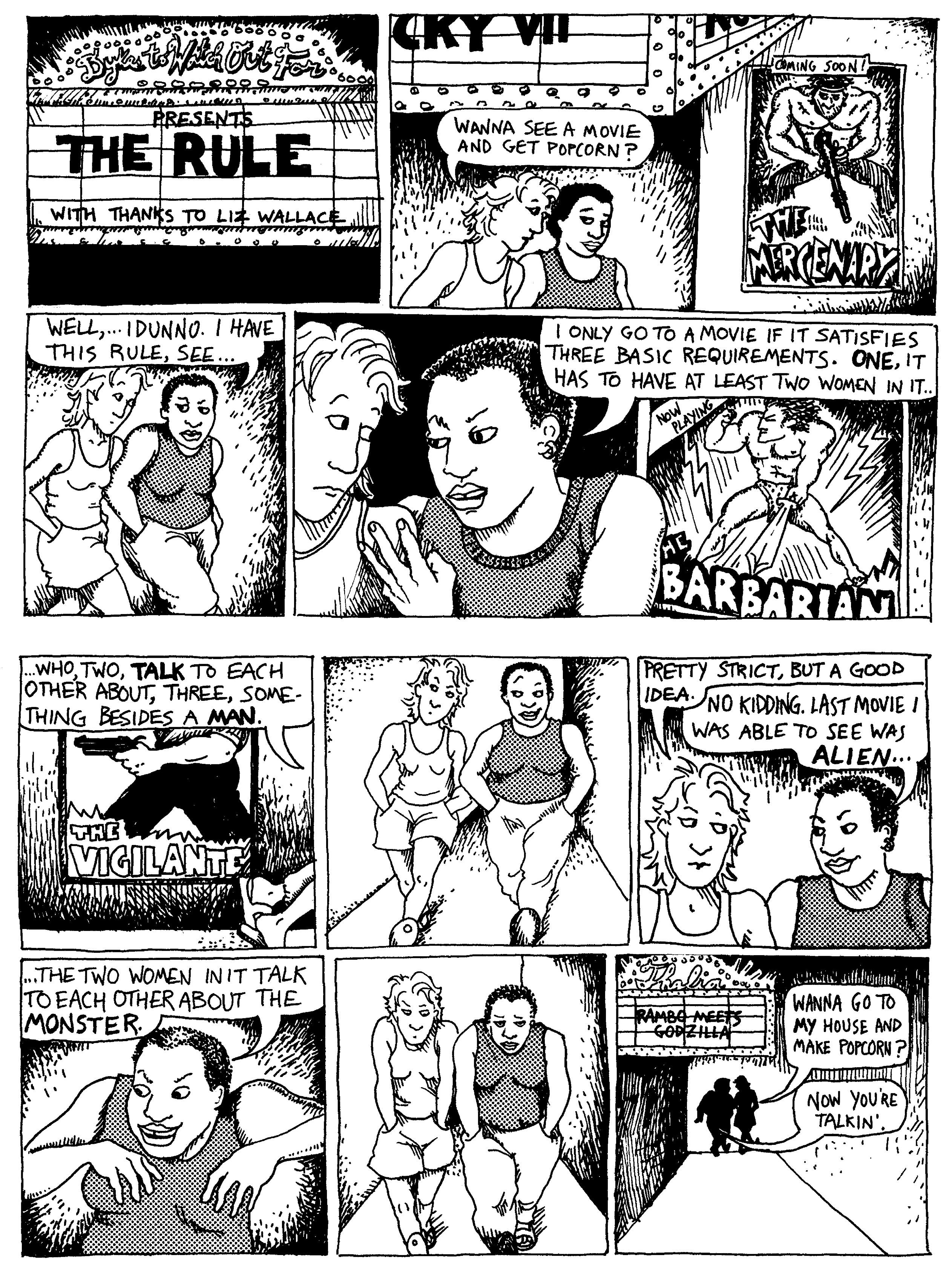
“The Rule,” Alison Bechdel
“Tongues Untied: Memoirs of a Pentacostal Boyhood,” Michael Warner
“Westkerk Tower,” Joan Hilty
Oranges are Not The Only Fruit, Jeanette Winterson
Angels in America, Tony Kushner
Fun Home, Alison Bechdel
supplementary materials TBA
Course Calendar
January
W 21: Introduction to the course
M 26: History and Narrative (glossary of narrative terms)
W 28: History of Sexuality
February
M 2: History of Sexuality: Foucault, “We Other Victorians
W 4: "Freud, “Three Contributions to the Theory of Sexuality"
M 9: History of Sexuality: Adrienne Rich “Compulsory Heterosexuality and Lesbian Existence,” “Westkerk Tower,” Joan Hilty
W 11: Literature and Sexuality: Woolf, A Room of One's Own, “The Rule,” Bechdel
M 16: classes do not meet
W 18: classes do not meet
M 23: Warner, “Tongues Untied”
W 25: continue “Tongues Untied”
March
M 2: Winterson, Oranges Are Not the Only Fruit
W 4: continue discussion Oranges Are Not the Only Fruit
M 9: continue discussion Oranges Are Not the Only Fruit
W 11: continue discussion Oranges Are Not the Only Fruit
M 16: continue discussion Oranges Are Not the Only Fruit
W 18: continue Oranges Are Not the Only Fruit
M 23: Introduce Bechdel, Fun Home First paper due
W 25: continue discussion Fun Home
M 30: classes do not meet
April
W 1: classes do not meet
M 6: continue discussion Fun Home
W 8: continue discussion Fun Home
M 13: continue discussion Fun Home
W 15: continue discussion Fun Home
M 20: Introduce Kushner, Angels in America Second paper due
W 22: continue discussion Angels in America
M 27: Kushner, Angels in America
W 29: continue discussion Angels in America
May
M 4: continue discussion Angels in America
W 6: continue discussion Angels in America
M 11: continue discussion Angels in America
W 13: Final Paper due
M 18: Spring Day Classes end





No comments:
Post a Comment